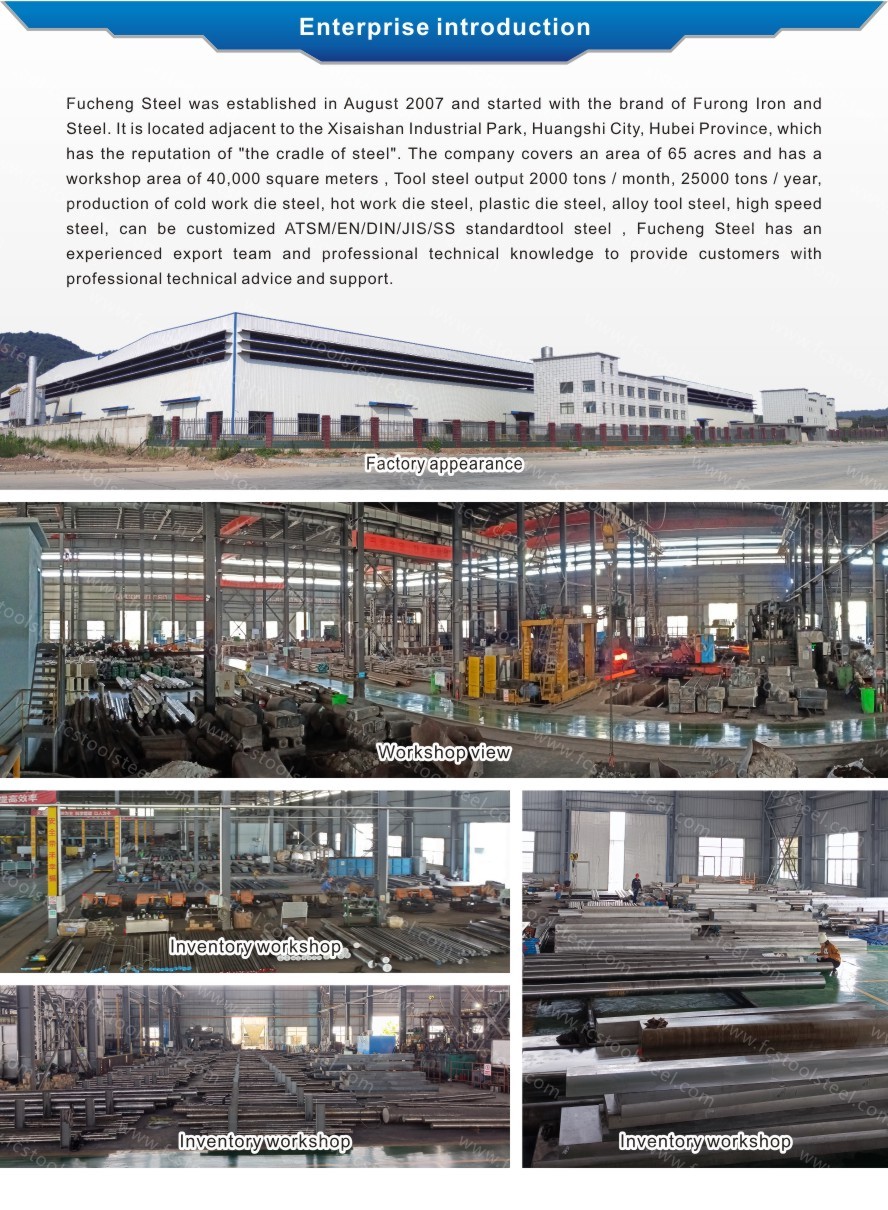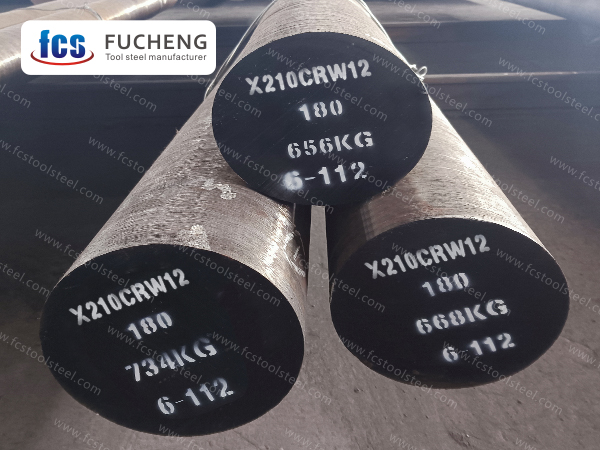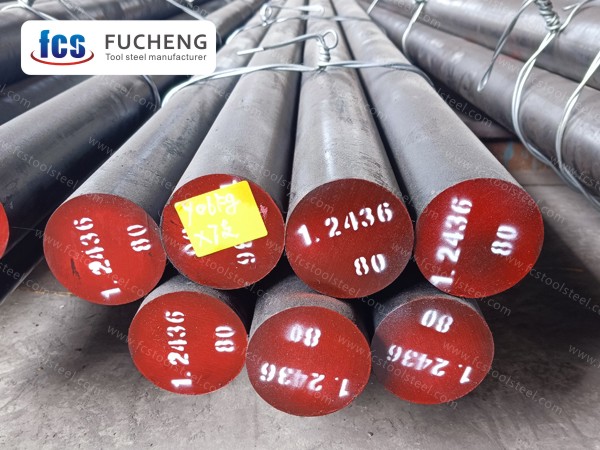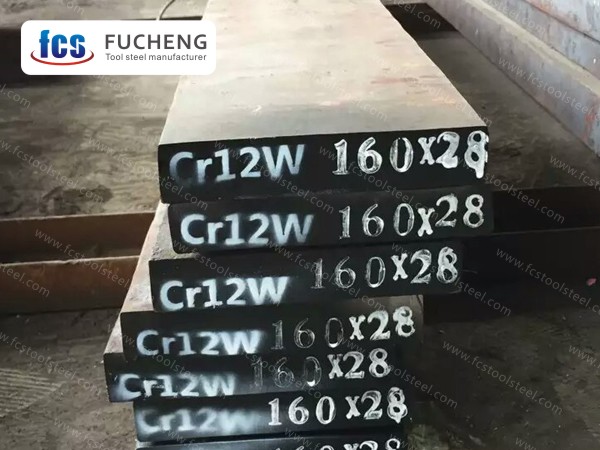

FCS D6 Tool Steel
As a representative of high-end cold work die steel, D6 steel's core highlight lies in achieving excellent balance between wear resistance and crack resistance through high carbon and high chromium alloy design, and significantly improving dimensional stability through deep cryogenic treatment technology; D6 steel exhibits excellent deformation resistance and durability in harsh working conditions such as silicon steel sheet punching and precision processing of high-strength steel plates, while also possessing good corrosion resistance, making it an ideal choice for high-precision and high load mold manufacturing.
- fucheng steel
- China
- 1 Month
- 2000 Tons/Month
D6 TOOL STEEL
| Brand | FCS |
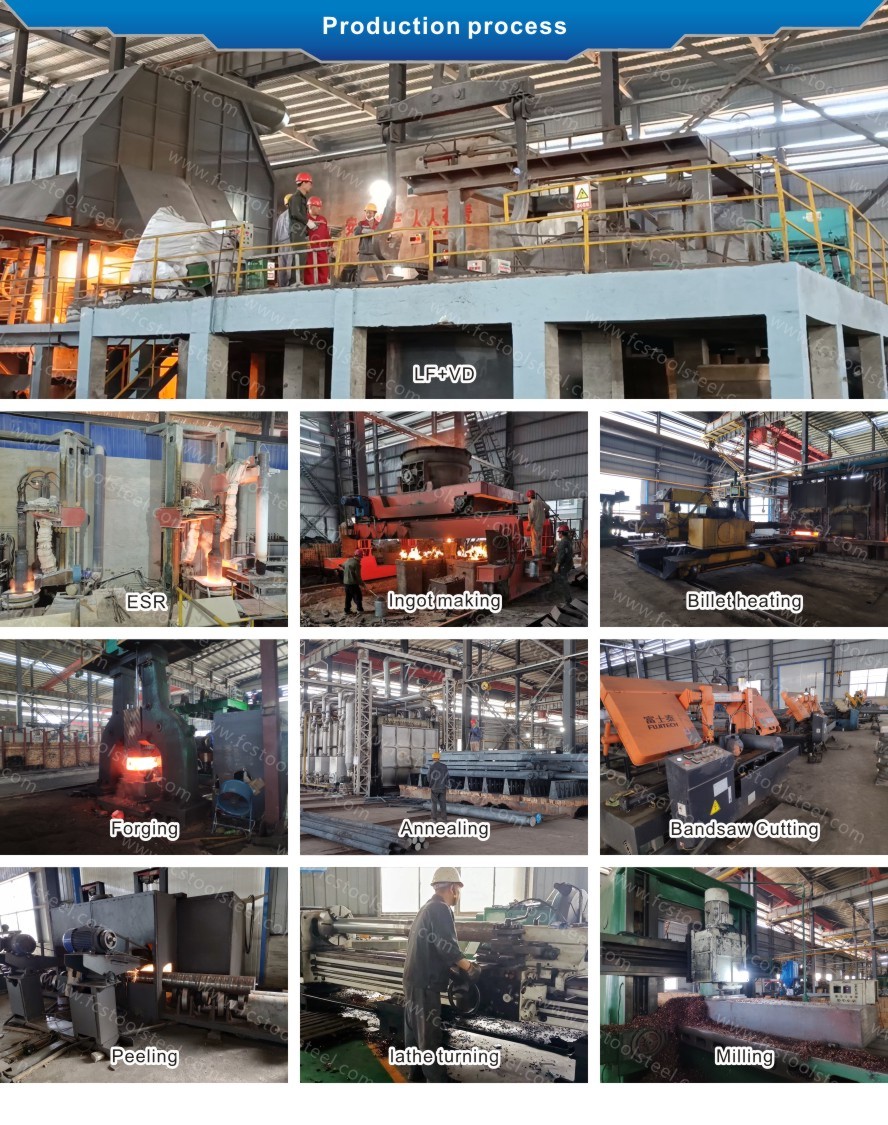
| Smelting and Manufacture Method: | LF+VD+Forged |
| Delivery Condition: | Annealed |
| Delivery hardness: | ≤255 HBS |
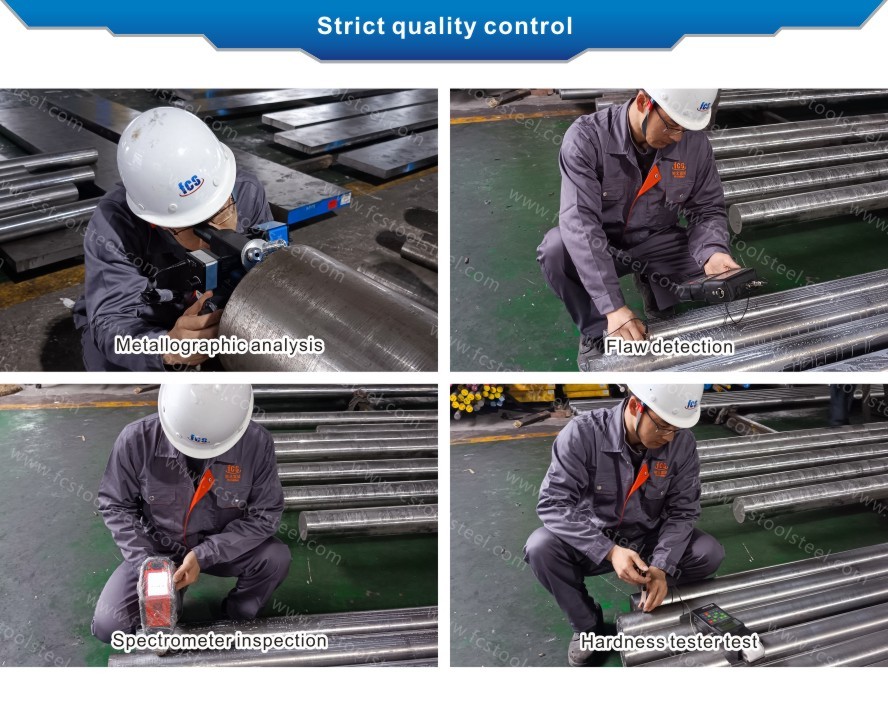
| UT Test Standard: | Sep 1921-84 Class3 D/d,E/e |
D6 STEEL GRADE COMPARISON AND CHEMICAL COMPOSITION COMPARISON
| Standard/Steel Grade | Chemical Composition(%) | |||||
| C | Si | Mn | Cr | W | ||
| ASTM | D6 | 2.00~2.20 | 0.35~0.50 | 0.20~0.40 | 11.50~12.50 | 0.60~0.90 |
| DIN/W-Nr. | X210CrW12/1.2436 | 2.00~2.25 | 0.10~0.40 | 0.15~0.45 | 11.00~12.00 | 0.60~0.80 |
| JIS | SKD2 | 2.00~2.30 | 0.10~0.40 | 0.30~0.60 | 11.00~13.00 | 0.60~0.80 |
APPLICATION
D6 steel, as a high carbon and high chromium alloy tool steel, is widely used in cold work stamping dies (such as silicon steel sheet punching dies, stretching dies), industrial cutting tools (heavy-duty shear blades, wire rolling dies), and special fields (thermosetting plastic forming dies, wear-resistant rolling rolls) due to its excellent wear resistance, high hardness, and thermal stability. D6 steel is particularly suitable for precision machining environments that require long-term maintenance of blade sharpness and dimensional accuracy. At the same time, its basic rust prevention ability also allows it to adapt to slightly humid working conditions.
D6 STEEL PROPERTIES
As a representative material of cold work die steel, D6 steel's high carbon and high chromium alloy design lays the foundation for super strong wear resistance. After heat treatment, the hardness easily exceeds 60HRC. D6 steel can maintain the sharpness of the cutting edge for a long time under harsh working conditions such as metal punching and extrusion, and its service life can reach 3-5 times that of ordinary alloy steel.
The compressive strength of D6 steel is particularly outstanding, and it can maintain structural integrity even under pressures above 2000MPa. The uniformly distributed carbide network in its microstructure can effectively block crack propagation in D6 steel, making the mold less prone to corner collapse under repeated impacts.
D6 steel can maintain stable performance in working environments below 300 ℃. The special alloy ratio enables it to maintain a hardness of 58HRC or higher during high-temperature tempering.
Although D6 steel has extremely high hardness, it can achieve good machinability through reasonable annealing treatment. The surface of D6 steel is not prone to micro cracks during electrical discharge machining, which is crucial for precision mold manufacturing.
After vacuum heat treatment, the fatigue limit of D6 steel is significantly increased, making it particularly suitable for making continuous molds for high-speed punching machines, with a service life 2-3 times longer than traditional materials.
D6 steel has stable dimensions and the heat treatment deformation can be controlled within 0.05%. This is crucial for multi cavity molds that require a precision of 0.01mm, which can significantly reduce the workload of subsequent mold repairs.
In terms of surface treatment compatibility, D6 steel can undergo surface strengthening such as TD treatment and PVD coating. After titanium plating treatment, the surface hardness of D6 steel can reach over 3000HV, and the friction coefficient is reduced to below 0.2, making it particularly suitable for precision punching of stainless steel thin plates.
In terms of maintenance, D6 steel molds only need to undergo regular low-temperature tempering to restore their performance. Compared to other tool steels, it has stronger resistance to stress corrosion and is less prone to stress cracking in humid environments.
PHYSICAL PROPERTIES
D6 steel is a tool steel customized for high-wear-resistance applications. The outstanding advantages of D6 steel are high wear resistance, high compressive strength, high surface hardness and excellent hardening stability. The deformation tendency of D6 steel after heat treatment is far lower than that of ordinary low-alloy tool steels.
Basic physical parameters: The room-temperature density of D6 steel is 7.67 g/cm³, and the elastic modulus reaches 194 GPa. The high-carbon high-chromium composition of D6 steel brings far better structural stability than ordinary steels.
Mechanical properties: The Rockwell C hardness of untempered D6 steel is about 46, and the compressive strength of D6 steel can reach up to 1320 MPa. After standard heat treatment, the hardness of D6 steel can stably reach 58-64 HRC, and D6 steel maintains good impact toughness and dimensional accuracy at the same time.
Additional performance advantages: D6 steel contains 11%-12% chromium, so D6 steel has certain corrosion resistance. D6 steel has excellent hardenability, D6 steel can achieve full-section hardening of large-size workpieces and meet the performance requirements of heavy-duty molds.
HEAT TREATMENT PROCESS
Forging process of D6 steel: Forging of D6 steel requires slow and uniform heating to 700℃ first, then rapid heating to 900-1050℃ for heat preservation before forging, and D6 steel needs to be cooled slowly with the furnace after forging.
Annealing process of D6 steel: After forging, D6 steel needs to be annealed by heat preservation at 800-840℃. After annealing, the hardness of D6 steel is about 225 HB, which can reduce the hardness of D6 steel and improve the cutting performance of D6 steel.
Stress relief process of D6 steel: If the processing of D6 steel is heavy, it is necessary to heat the D6 steel workpiece to 650-700℃ for heat preservation before hardening, then cool slowly to release the internal processing stress of D6 steel.
Quenching (hardening) process of D6 steel: Quenching of D6 steel requires slow preheating to 750-800℃ for full penetration heating, then heat D6 steel to 950-980℃ for final hardening. D6 steel can be quenched by air quenching, oil quenching or vacuum high-speed gas quenching; The mature quenching process for industrial D6 steel circular blades is: D6 steel blank is heated in salt bath at 955 ~ 965℃, then quenched in nitrate salt at 210℃.
Tempering process of D6 steel: Tempering of D6 steel
requires uniform heating at the preset temperature, and D6 steel needs
heat preservation for at least 1 hour per 25mm of thickness. It is
recommended that D6 steel be cooled to room temperature and then
tempered for the second time. Reference of D6 steel hardness
corresponding to different tempering temperatures: the hardness of D6
steel tempered at 100℃ ≈ 63 HRC, at 200℃ ≈ 62 HRC, and at 300℃ ≈ 60 HRC.
After D6 steel circular blades are tempered in an air furnace at 180 ~ 200℃, the hardness of D6 steel can reach 63 ~ 64 HRC, with stable quality and excellent performance.