


AISI 440C Stainless Steel | X105CrMo17 | 1.4125 | SUS440C
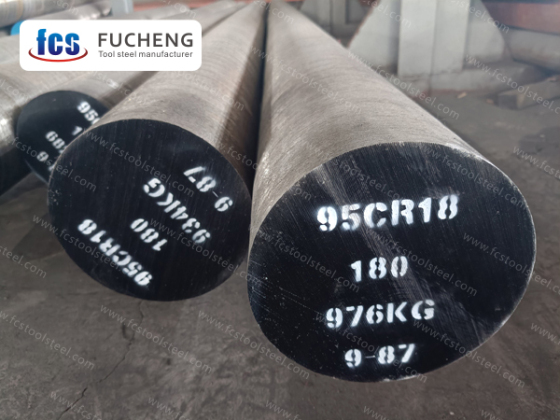
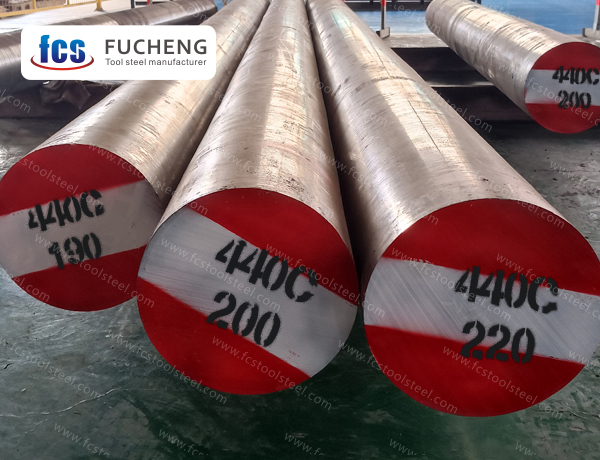
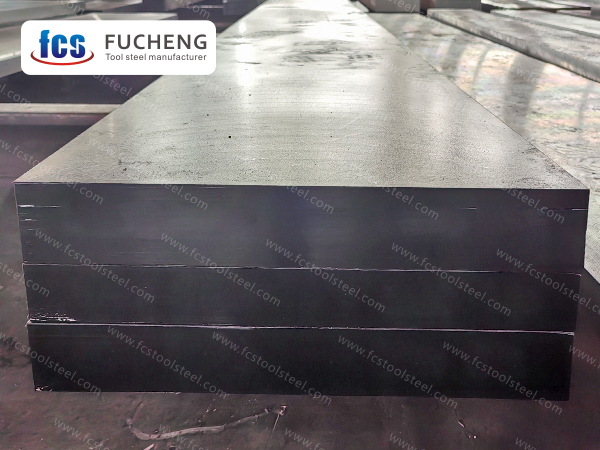
440C steel is a high carbon and high chromium martensitic stainless steel with high hardness, strong wear resistance, and moderate rust resistance, which is superior to traditional tool steel. 440C steel has strong adjustability in heat treatment, suitable for multiple scenarios such as cutting tools, bearings, and medical devices, with outstanding cost-effectiveness. 440C steel is a classic practical steel in both industrial and civilian fields.
- fucheng steel
- China
- 1 Month
- 2000 Tons/Month
- Information
- Video
- Download
440C STAINLESS STEEL
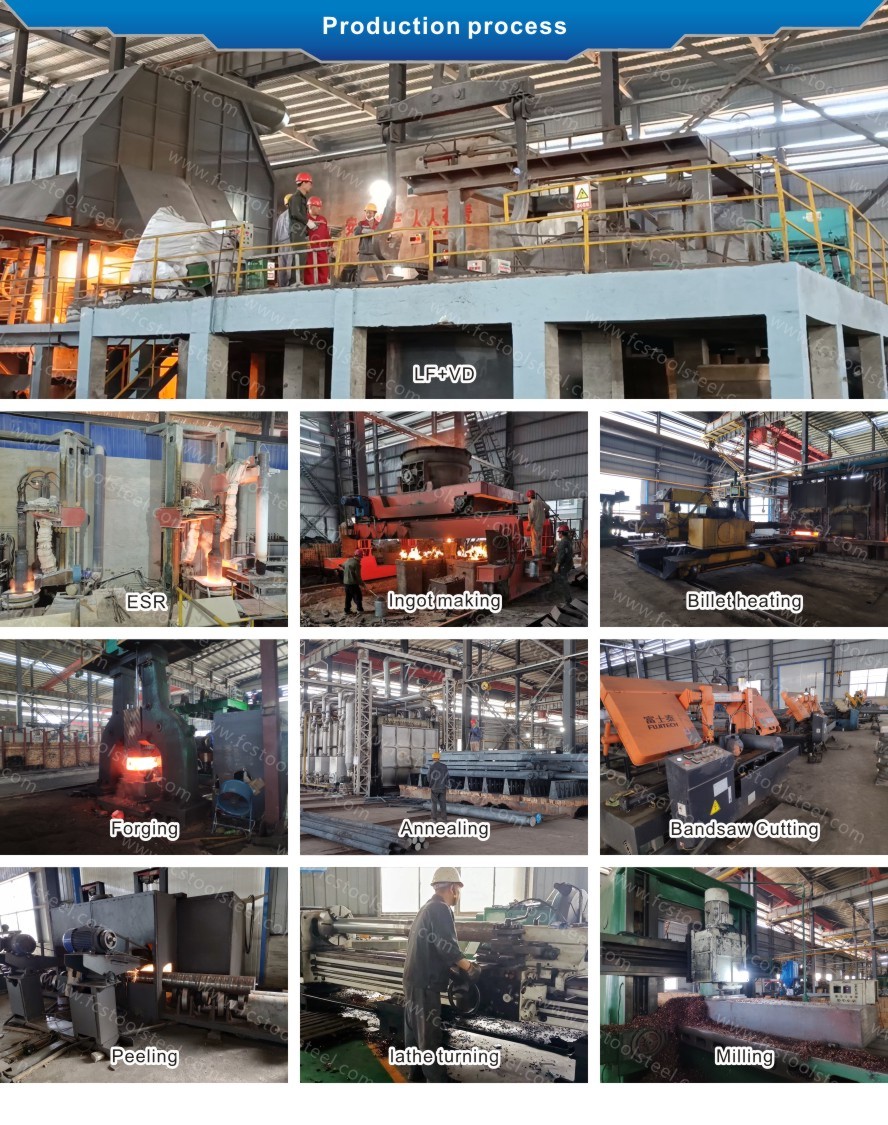
| Smelting and Manufacture Method: | LF+VD+Forged |
| Delivery Condition: | Annealed |
| Delivery hardness: | ≤225 HBS |
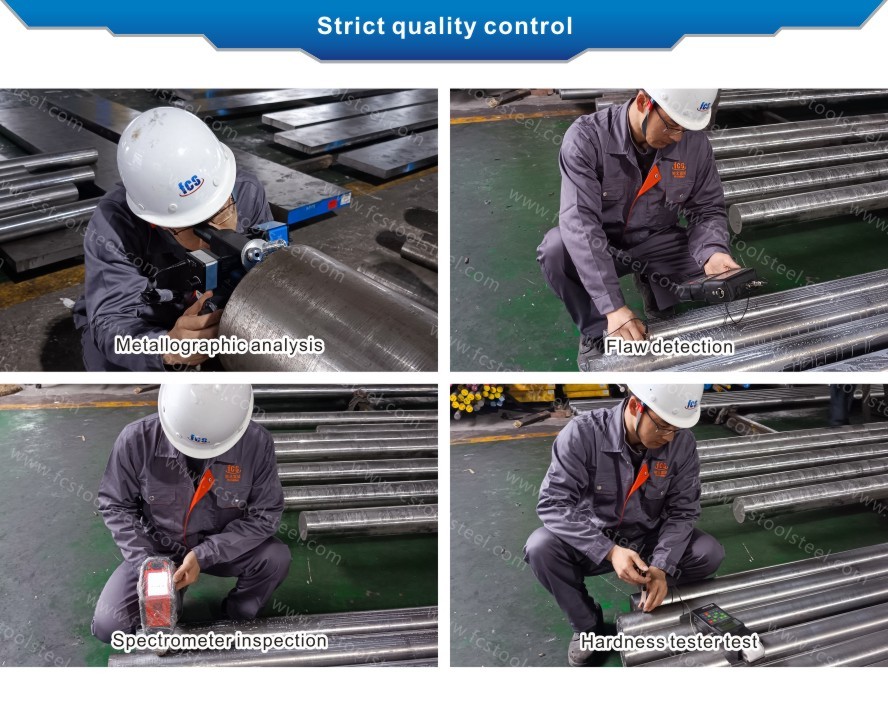
| UT Test Standard: | Sep 1921-84 Class3 D/d,E/e |
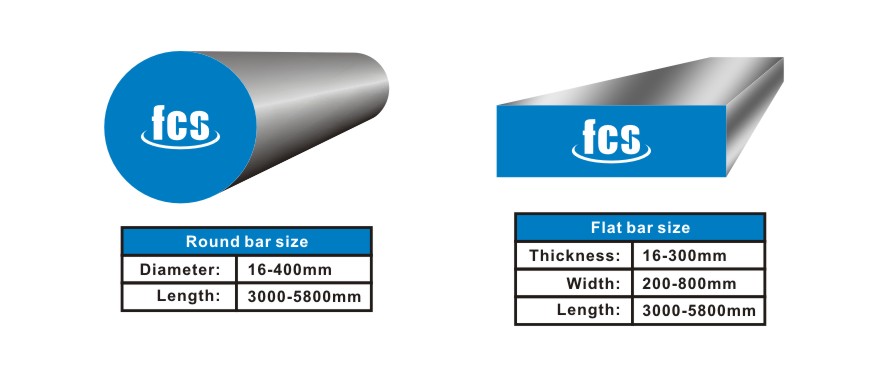
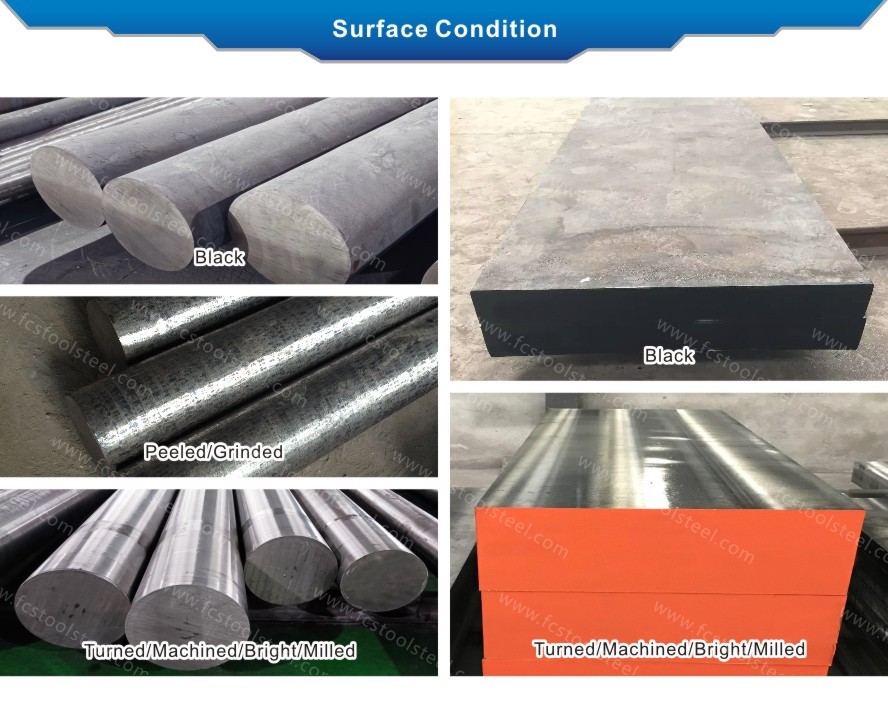
440C STEEL GRADE COMPARISON AND CHEMICAL COMPOSITION COMPARISON
| Standard/Steel Grade | Chemical Composition(%) | ||||||
| C | Si | Mn | Cr | Mo | V | ||
| ASTM | 440C | 0.95~1.20 | ≤1.00 | ≤1.00 | 16.00~18.00 | ≤0.75 | - |
| GB | 9Cr18Mo | 0.95~1.10 | ≤0.80 | ≤0.80 | 16.00~18.00 | - | 0.40~0.70 |
APPLICATION
440C steel is a high carbon, high chromium martensitic stainless steel known for its high hardness, wear resistance, and excellent corrosion resistance. Commonly used in high-end cutting tools (such as surgical instruments, kitchen knives), industrial molds, bearings, and other scenarios that require high strength and durability.
440C Steel Characteristics
440C steel has a carbon content of 1.0% and a chromium content of 16-18%. This gives 440C excellent rust resistance and is widely considered a high-quality stainless steel. Due to these characteristics, 440C steel is mainly used for manufacturing bearing parts that work in corrosive environments and non lubricated strong oxidizing atmospheres. It contains a high proportion of chromium element, which can form a dense chromium oxide protective film on the surface of the steel, effectively preventing contact between the steel and the external environment, thereby avoiding the occurrence of corrosion. This enables 440C steel to maintain good corrosion resistance in humid, acidic, or alkaline environments. Therefore, it is widely used in manufacturing components and equipment in industries such as marine, chemical, and food processing.
440C steel can achieve the highest hardness, wear resistance, and strength among all stainless steel grades after heat treatment. This gives it an advantage in applications that require high strength and hardness. For example, in the manufacturing of engine parts in the aerospace industry, transmission systems and structural components in automotive manufacturing, materials with high strength and wear resistance are required. And 440C steel precisely meets these needs. In addition, due to its high hardness, 440C steel is also suitable for manufacturing tools, cutting tools, and other tools that require high hardness.
440C steel can achieve hardness close to HRC60 through quenching and tempering treatment, with excellent strength, hardness, and wear resistance. This gives it an advantage in applications that require high strength and hardness. For example, in the manufacturing of oil drilling tools, mining machinery parts, etc., materials with high strength and wear resistance are required. And 440C steel precisely meets these needs. In addition, due to its high hardness, 440C steel is also suitable for manufacturing tools, cutting tools, and other tools that require high hardness.
440C steel is both corrosion-resistant and wear-resistant, while also possessing good high-temperature dimensional stability. Its strong rust resistance, high hardness, and good wear resistance make it widely used in various industrial fields. Whether in the fields of aviation, aerospace, automotive manufacturing, oil drilling, or mining machinery, the presence of 440C steel can be seen. Therefore, it can be said that 440C steel is a very important industrial material, playing an important role in promoting the development of various industries.