
HMD-1 STEEL
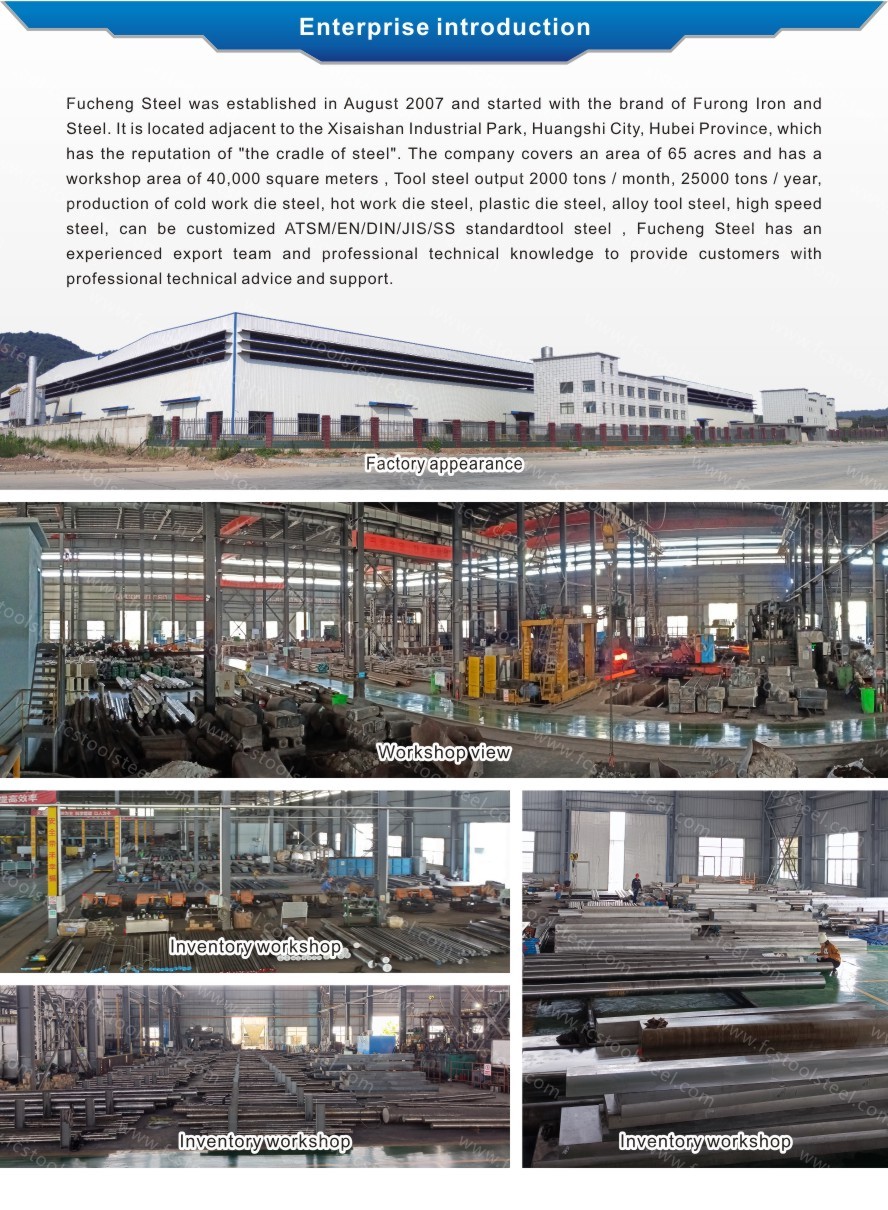
- fucheng steel
- China
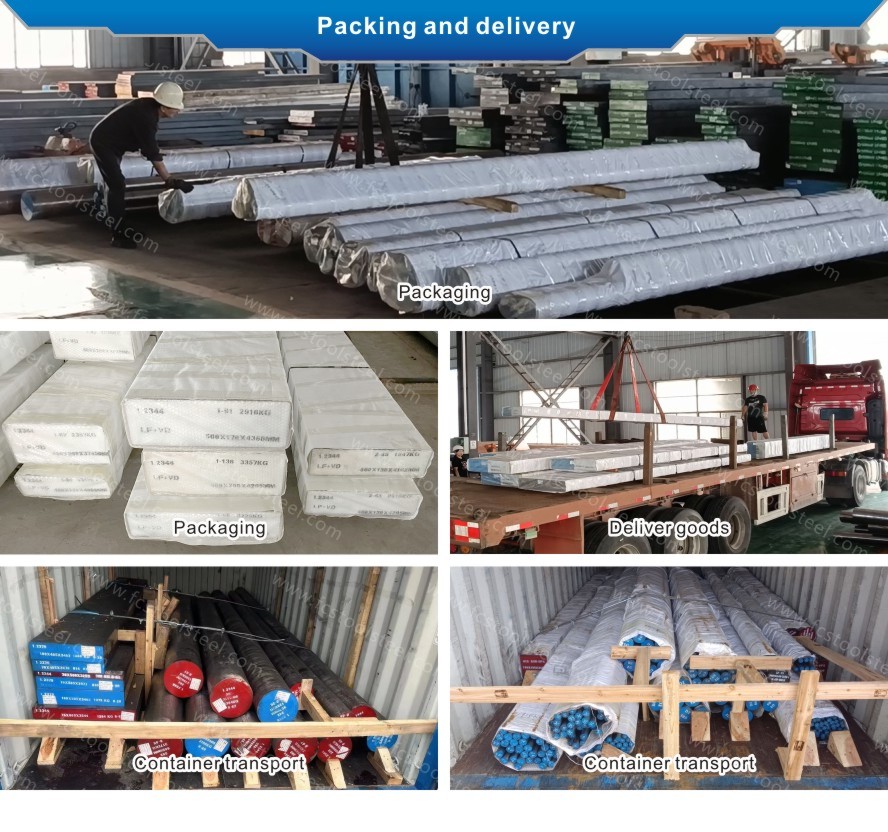
- 1 Month
- 2000 Tons/Month
HMD-1 STEEL
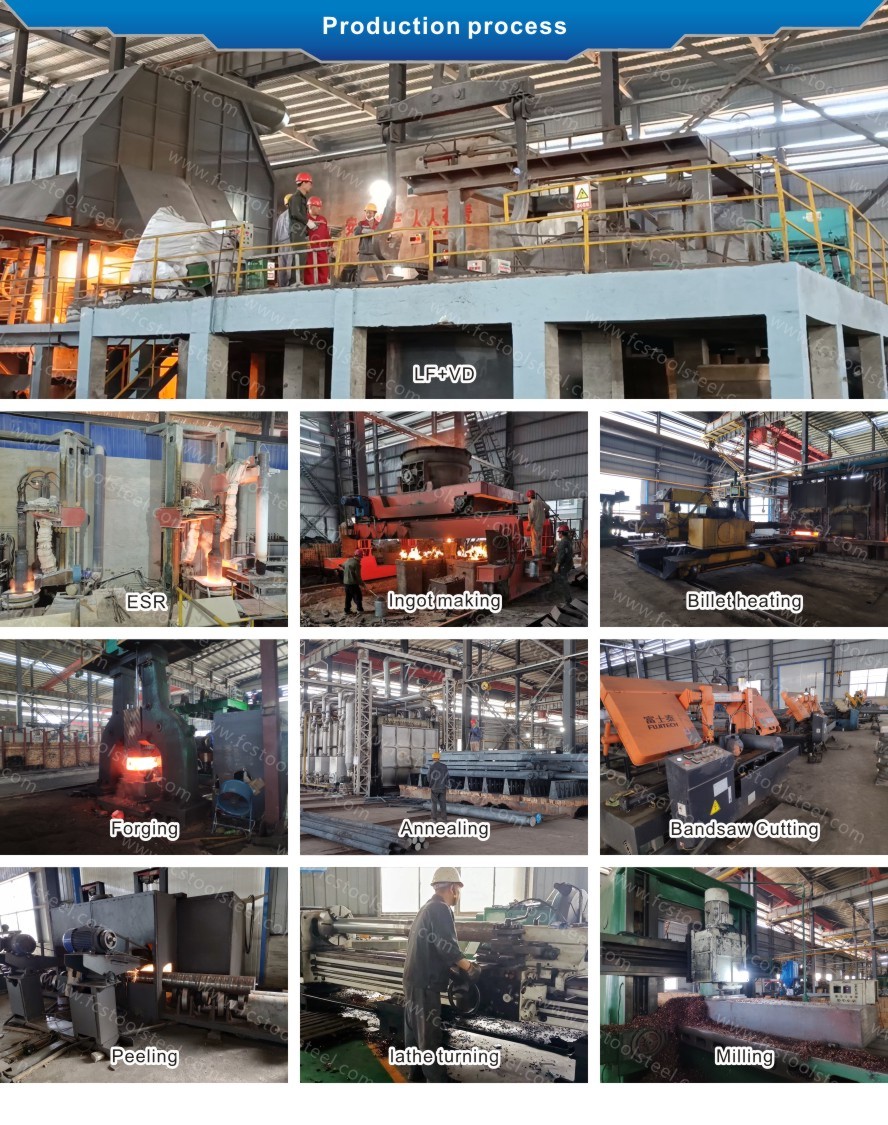
| Smelting and Manufacture Method: | LF+VD+ESR+Forged |
| Delivery Condition: | Annealed |
| Delivery hardness: | ≤225 HBS |
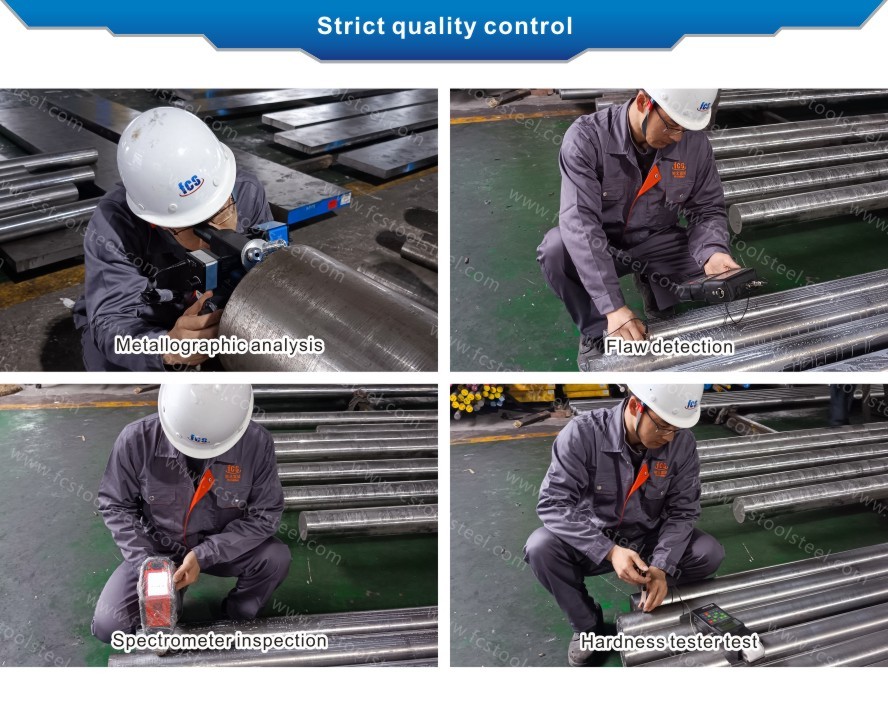
| UT Test Standard: | Sep 1921-84 Class3 D/d,E/e |
HMD-1 STEEL CHEMICAL COMPOSITION
| Steel Grade | Chemical Composition(%) | |||||
| C | Si | Mn | Cr | Mo | V | |
| HMD-1 | 0.80~0.90 | 0.80~1.10 | 0.70~1.00 | 1.80~2.20 | 0.20~0.30 | 0.05~0.10 |
APPLICATION
HMD-1 mold steel is a two-phase extremely fine quenched steel with high strength, toughness, hardness, wear resistance, and high-temperature stability. It is widely used in the manufacturing of high-precision injection molds, extrusion molds, die-casting molds and other industrial fields.
HMD-1 STEEL CHARACTERISTICS
As a new type of high-strength mold steel, HMD-1 steel's characteristics are reflected in multiple dimensions such as material design, performance balance, and industrial applications. HMD-1 steel has significantly improved its toughness performance while maintaining high hardness through optimized alloy ratios and heat treatment processes.
HMD-1 steel adopts a low-carbon high alloy design, with a carbon content controlled in the range of 0.35-0.45%, combined with strong carbide forming elements such as molybdenum and vanadium. The HMD-1 steel composition system not only ensures hardenability but also reduces the generation of large-sized carbides, resulting in a microstructure uniformity improvement of over 40% compared to traditional mold steels.
The heat treatment response of HMD-1 steel exhibits a broad process window, with a quenching temperature range of 880-920 ℃. When using graded quenching, a deformation rate of less than 0.05% can be achieved. After low-temperature tempering at 200-300 ℃, the hardness of HMD-1 steel remains stable at 58-60HRC, and can still maintain above 54HRC even after high-temperature tempering at 500 ℃.
The wear resistance of HMD-1 steel is achieved through nanoscale MC type carbide dispersion strengthening, and its lifespan is 2.3 times that of H13 steel in aluminum alloy die-casting mold testing. The unique wear self-healing mechanism of HMD-1 steel is manifested by the dynamic regeneration of surface oxide film, which is particularly suitable for thermal cycling conditions.
The thermal fatigue resistance of HMD-1 steel has significantly improved, with a 15% increase in thermal conductivity compared to SKD61, and a critical thermal shock temperature difference of 380 ℃. HMD-1 steel effectively solves the problem of cracking failure in die-casting molds by maintaining a tensile strength of 1200MPa at a high temperature of 700 ℃.
The cutting machinability of HMD-1 steel has achieved revolutionary improvement, and a milling speed of 50m/min can be achieved when the annealed hardness is ≤ 220HB. When HMD-1 steel is quenched and hardened using ceramic cutting tools, the surface roughness Ra can reach 0.8 μ m, significantly reducing the subsequent polishing cost of the mold.
The dimensional stability of HMD-1 steel is strengthened through dual aging treatment, and the residual austenite content after cryogenic treatment at -196 ℃ is less than 3%. After six months of use, the size change of HMD-1 steel precision mold does not exceed 0.003mm/m, meeting the requirements for optical component forming.